
How To Spot A Bad Toilet Flange Before It Leaks
A toilet flange is the round fitting that anchors your toilet to the floor and connects the bowl to the drain pipe below, and it does far more work than most homeowners realize. It carries the weight of a fixture that shifts every time someone sits down, holds the closet bolts that keep the toilet from rocking, and provides the flat surface the wax ring seals against. When that flange cracks, corrodes, or sits too low against the finished floor, the seal fails slowly rather than all at once, which is exactly what makes it so damaging. Water and waste seep out at the base a little at a time, soaking into subfloor and framing long before anything visible pools on the tile. Homeowners in Cedar Park and Round Rock often discover the problem only after the bathroom floor feels soft or the ceiling below shows a stain. The good news is that a failing flange gives off warning signs for weeks or months before it leaks outright, and every one of those signs is something you can check yourself in about five minutes. Learning what to look for now saves you from tearing out flooring later.
Early Warning Signs Of A Bad Toilet Flange
Most flange failures announce themselves through movement, smell, and small changes in how the toilet behaves. The flange is buried under the toilet base, so you are reading indirect evidence rather than looking at the part itself, and that means paying attention to details you might otherwise ignore. A toilet that has always been rock solid and suddenly shifts is telling you something structural has changed underneath it. A bathroom that smells faintly of sewer gas even after a thorough cleaning is telling you the seal is no longer airtight. These symptoms rarely show up alone; once one appears, the others usually follow within a few months. Catching them early is the difference between a straightforward flange repair and a job that includes subfloor replacement, new tile, and drywall work in the room below.
A Rocking Toilet Is The First Sign Of A Bad Toilet Flange
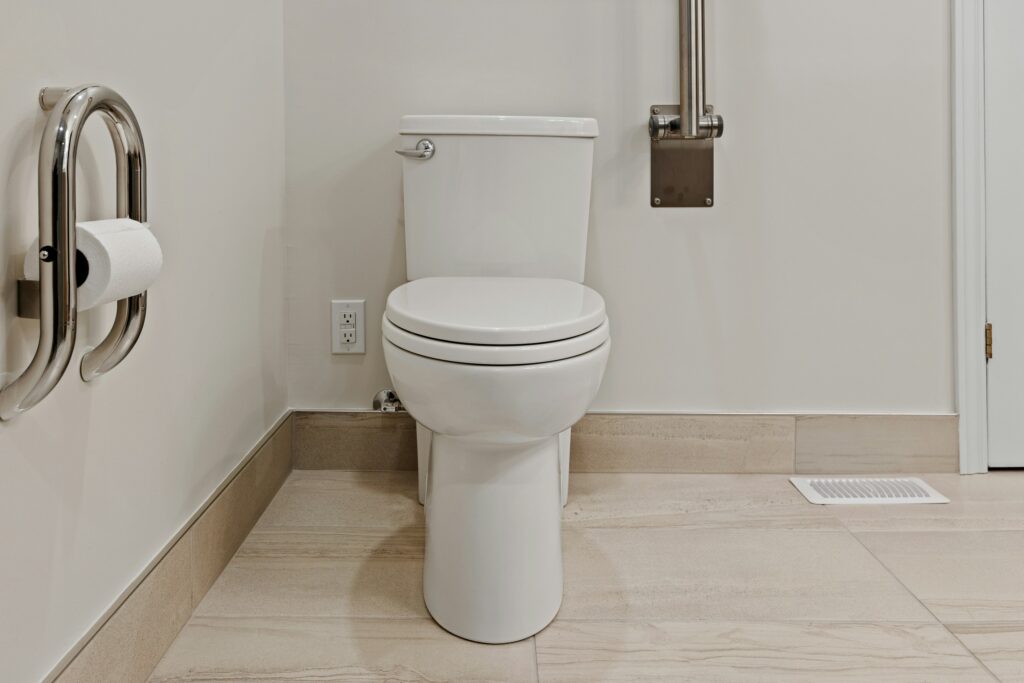
Sit on your toilet and shift your weight side to side, then front to back. A properly mounted toilet should feel completely immobile, with no give and no faint knocking sound as the base meets the floor. If you feel even a small amount of rock, the flange is the first suspect, because the closet bolts that hold the toilet down thread directly into the flange slots. When the flange cracks around those slots, or when the bolt heads pull through corroded metal, the toilet loses its anchor and begins to pivot on the wax ring. That pivoting motion is what destroys the seal. Every rocking movement compresses one side of the wax and lifts the other, opening a gap that water finds immediately.
Homeowners frequently try to solve rocking by tightening the closet bolts, and that instinct makes the problem worse in most cases. Porcelain has almost no flex, so overtightening cracks the base of the bowl or snaps the remaining intact section of the flange. If you tighten the nuts and the toilet still moves, or if the nuts spin without ever getting snug, the flange underneath has already failed. Shims wedged under the base are another common patch that hides the symptom without addressing the cause. Shimming stops the visible wobble but leaves the broken flange in place, still unable to hold the toilet against the drain properly.
Pay attention to how long the rocking has been going on, because duration tells you a great deal about the likely damage below. A toilet that started moving last week probably has a compromised seal and little else. A toilet that has rocked for a year or more has almost certainly been leaking small amounts of water into the subfloor that entire time, and that water has had months to soften plywood and feed mold growth. Press your fingers around the base of the toilet and along the floor a foot or two out from it. Any softness, sponginess, or flexing underfoot means the repair has grown beyond the flange itself and needs professional evaluation.
Sewer Gas Odor Points To A Bad Toilet Flange Seal
The wax ring between your toilet and the flange does two jobs at once. It keeps water inside the drain path, and it blocks sewer gas from escaping into the bathroom. When the flange sits too low or has cracked, the wax ring cannot maintain full contact around the entire circumference, and gas escapes through the gap. That gas is what you smell. It has a distinct sulfur or rotten quality that persists even after you clean the toilet, mop the floor, and run the exhaust fan for an hour. A cleaning-resistant smell is one of the most reliable indicators that the seal has broken.
Timing offers another clue worth noticing. Sewer odor from a failed flange seal is often strongest right after a flush, when pressure changes in the drain line push gas upward through the opening. It also tends to intensify in warmer months when the bathroom heats up and air movement in the home changes. Cedar Park summers push attic and wall temperatures high enough that many homeowners first notice the smell between June and September, even though the seal broke months earlier. If the odor comes and goes with flushing rather than staying constant, the flange area is almost certainly the source.
Do not confuse this problem with a dry P-trap, which produces a similar smell for a completely different reason. A guest bathroom that goes unused for weeks will let the trap water evaporate, and gas rises freely through the empty trap until someone runs water again. The test is simple: flush the toilet several times, run the sink, and wait a day. If the smell disappears, you had a dry trap. If the smell returns or never left, the seal at the flange is the problem and the wax ring needs to come out so the flange itself can be inspected. Persistent sewer odor is never something to live with, since sewer gas contains methane and hydrogen sulfide.
Water At The Base Confirms A Bad Toilet Flange Problem
Water pooling at the base of the toilet is the sign most homeowners recognize, and unfortunately it is also the latest one to appear. By the time water shows up on the finished floor, the wax ring has failed completely and the subfloor beneath has usually been absorbing moisture for some time. Still, the way that water presents itself carries useful information. Water that appears only after a flush, then dries up and returns with the next flush, points directly at the flange and wax ring rather than at the tank or supply line. A slow puddle that stays constant regardless of use is more likely a supply line or tank bolt issue.
Run a dry paper towel around the entire base of the toilet and along the supply line connections before you assume anything. Check the tank bolts, the fill valve nut underneath the tank, and the shutoff valve at the wall. If all of those come back dry and the towel picks up moisture only where the porcelain meets the floor, the flange seal has failed. Discoloration in grout lines radiating outward from the toilet base is a related sign, and so is caulk that has darkened, softened, or pulled away from the porcelain. Many toilets are caulked around the base, which can trap escaping water underneath and hide the leak for a surprisingly long time.
Look at the ceiling directly below the bathroom if the toilet sits on a second floor. Brown rings, bubbling paint, or a sagging patch of drywall in that spot are strong evidence of an ongoing flange leak, and they mean water has been traveling through the floor structure for weeks at minimum. First floor bathrooms over a slab hide the damage more effectively, so watch for tile that sounds hollow when tapped, grout that crumbles near the toilet, or a musty smell in the room that never fully clears. Seeing water around your toilet base? Click here for our toilet repair service.
How To Inspect A Toilet Flange For Damage Yourself
You can learn a great deal about your flange without removing the toilet, and a careful visual inspection often tells you exactly how urgent the situation is. The goal of a homeowner inspection is not to diagnose the exact failure mode but to determine three things: is the toilet stable, is the seal intact, and has any water reached the floor structure. Those three answers tell you if you are dealing with a routine flange replacement or a larger repair. Work through the checks in order, since each one builds on the last. Give yourself ten minutes and a flashlight, and write down what you find so you can describe it accurately to a plumber if you need one.
The Homeowner Bad Toilet Flange Inspection Checklist
Start with the closet bolt caps, the small plastic covers on either side of the toilet base. Pop them off with a flathead screwdriver and look at the bolts and nuts underneath. Heavy rust, a nut that sits loose against the porcelain, or a bolt tilted at an angle instead of standing straight up all point to flange trouble. Try turning each nut a quarter turn by hand. If it turns freely without resistance, or if the entire bolt spins in place, the flange slot holding that bolt has broken and the toilet is anchored by one point instead of two. That condition guarantees eventual seal failure even if nothing is leaking yet.
Next, examine the joint where the porcelain base meets the floor all the way around. Use your flashlight at a low angle so shadows reveal irregularities you would otherwise miss. You are looking for gaps, dark staining, crumbling grout, and caulk that has separated from the porcelain. Press a fingernail into the caulk line; caulk that has been sitting in moisture feels soft and gives way easily, while sound caulk stays firm. Run your hand across the floor tiles surrounding the toilet and note any that feel loose, sound hollow when tapped, or sit at a slightly different height than their neighbors. Tile movement near a toilet almost always means the subfloor underneath has absorbed water and lost strength.
Finish the inspection by checking the flooring in a wider radius and, where possible, the space below. Walk slowly around the toilet in stocking feet and feel for any spot that flexes or gives. In homes with a crawlspace or an unfinished basement, take your flashlight underneath and look at the underside of the bathroom floor directly beneath the toilet location. Water stains, white mineral deposits, darkened wood, or visible dampness on the joists confirm an active leak. Record what you find, including how far the staining extends, since the size of the affected area determines whether the repair stays contained to the flange or expands into structural work.
Common Bad Toilet Flange Failures And What Causes Them
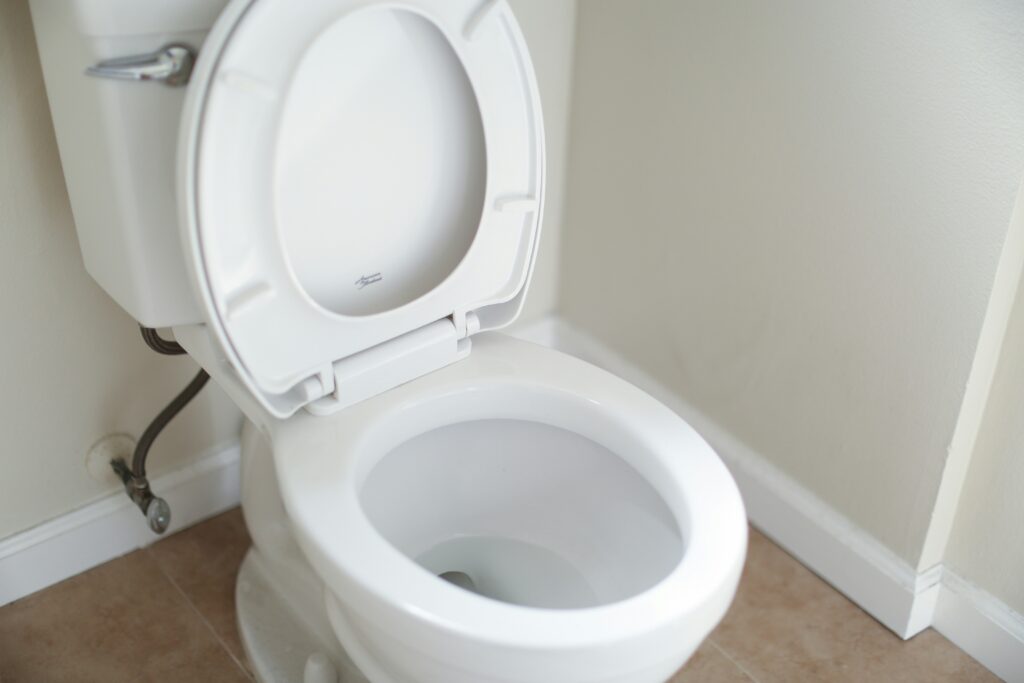
Flanges fail in a handful of predictable ways, and knowing them helps you interpret what you are seeing. PVC flanges with metal rings are extremely common in Central Texas homes, and the metal ring is usually the first component to go. It corrodes from moisture exposure, thins over years, and eventually cracks at the bolt slots where stress concentrates. Cast iron flanges in older Austin and Georgetown homes fail differently, rusting from the inside out until the ring becomes brittle and breaks under load. All-PVC flanges resist corrosion but can crack from overtightened bolts or from the toilet shifting repeatedly over time.
Height is the other major failure category, and it causes problems even when the flange itself is perfectly intact. A flange should sit level with the finished floor or slightly above it, ideally a quarter inch proud, so the wax ring compresses properly against a solid surface. Remodels create height problems constantly. New tile, luxury vinyl plank, or an additional underlayment layer raises the floor while leaving the flange at its original elevation, and suddenly the wax ring has to span a gap it was never designed to bridge. The seal holds for a while, then thins, then fails. If your flange trouble started within a year or two of new bathroom flooring, height is almost certainly the cause.
Improper installation accounts for a meaningful share of failures as well. Flanges that were glued to the drain pipe but never screwed down to the subfloor will lift over time as the toilet is used. Flanges secured with drywall screws instead of proper stainless fasteners corrode and lose their grip. Flanges installed on rotted or previously water damaged subfloor never had solid material to anchor into in the first place. Repair rings stacked on top of old broken flanges are another shortcut that buys a year or two and then fails again, often more dramatically. Not sure what is causing your toilet leak? Click here for our leak detection service.
When A Bad Toilet Flange Requires Professional Repair
Some flange situations are genuinely straightforward, and some are not, and the difference matters for your floor and your budget. A cracked flange sitting on a dry, solid subfloor with a stable toilet is a contained repair that a licensed plumber handles in a single visit. Pull the toilet, remove the old flange, install a new one properly anchored, set a fresh wax ring, and reset the fixture. The variable is what shows up once the toilet comes off the floor, and that is impossible to know in advance with certainty. Roughly half of flange jobs reveal at least some subfloor deterioration around the drain opening.
Call a professional immediately if you find soft flooring, ceiling stains below the bathroom, or visible dampness on joists in a crawlspace. Those conditions mean water has been leaving the drain path for an extended period, and the repair now involves cutting out and replacing compromised subfloor before a new flange can be anchored to anything solid. Anchoring a flange to soft plywood produces a repair that fails again within months. The same applies to any flange that has been repaired before with a stacked repair ring, since those layers must come out before a proper installation can go in.
Slab foundations, which cover the majority of homes in Cedar Park, Leander, and Pflugerville, add another layer of complexity to flange work. The drain pipe is encased in concrete, so there is no room to cut back and rebuild if the pipe itself is damaged at the connection point. Repairs on slab require specific flange types and careful technique, and mistakes are expensive to undo. Cast iron flanges on older slab homes are especially demanding, since the surrounding material is often corroded and fragile. A licensed plumber who works on these systems regularly will identify the right approach before anything gets cut.
Why You Need A Licensed Plumber For Toilet Flange Repair
A bad toilet flange is a small part causing a large amount of potential damage, and the cost of getting the repair wrong is measured in flooring, framing, and drywall rather than in parts. The flange connects your toilet to the drainage system that carries waste out of your home, which makes it a plumbing code item, not a general handyman task. Proper repair means correct flange height relative to finished floor, secure anchoring into sound subfloor, appropriate materials for your pipe type, and a wax ring or seal matched to the actual installed conditions. Whitestone Plumbing handles toilet flange repair throughout Cedar Park, Round Rock, Leander, Georgetown, Austin, Pflugerville, Lago Vista, Jonestown, and Hudson Bend. Our technicians identify what actually failed and fix the underlying cause so the repair holds.
Fast Response For Bad Toilet Flange Leaks
A flange leak does not stay contained, and every day it continues adds material to the eventual repair. Water moves along the path of least resistance through subfloor seams, down wall cavities, and into ceiling structure below. Whitestone Plumbing offers 24/7 emergency plumbing service because a toilet that has started actively leaking at the base cannot wait until the following week. We arrive, stop the water, and assess the full scope before damage spreads further.
Speed only matters if the diagnosis is right, and toilet base leaks have several possible sources that look identical from above. Our technicians check the flange, the wax ring, the closet bolts, the tank bolts, and the supply line before determining what failed. That step prevents the common outcome where a homeowner replaces a wax ring, sees the leak stop for two weeks, and then watches it return because the actual problem was a cracked flange all along. Correct diagnosis on the first visit saves you a second repair.
We also tell you plainly what we find underneath the toilet once it comes off the floor. If the subfloor is sound, we say so and complete a clean flange replacement. If there is rot that needs addressing, you get a clear explanation and honest pricing before any additional work begins. Free estimates and clear, honest pricing are how we operate on every job.
Complete Toilet And Drain Service Beyond The Flange
Flange problems rarely exist in complete isolation, and a thorough inspection often reveals related issues worth addressing at the same time. A toilet that has been rocking for months may have hairline stress cracks in the porcelain base. Closet bolts may be corroded past reuse. The drain line below may be partially blocked, creating the pressure fluctuations that pushed sewer gas through the failing seal in the first place. Handling these together prevents repeat service calls.
Whitestone Plumbing covers the full range of residential plumbing, so we can address whatever the inspection turns up. Our services include toilet repair and toilet installation, drain cleaning, leak detection, burst pipe repair, water heater installation, and repiping. That range means one company diagnoses the problem and completes the work rather than handing you off to someone else halfway through.
If your toilet is old enough that flange repair is a good moment to reconsider the fixture itself, we can walk you through the options honestly. A twenty year old toilet with a cracked base and a failed flange is often better replaced than repaired, particularly given the water savings modern fixtures deliver. We give you the real numbers on both paths and let you decide. Ready to replace an aging toilet? Click here for our toilet installation service.
Why Choose Whitestone Plumbing For Toilet Flange Repair
Whitestone Plumbing is a locally owned and operated company based at 702 Dewberry Dr in Cedar Park, with more than 20 years of plumbing experience behind every service call. We are licensed and insured, and our technicians are backflow licensed and certified. Living and working in this area means we know how Central Texas slab construction, local water conditions, and typical home ages affect the plumbing we service every day.
We are dedicated to always providing five star service, and that commitment shows up in how we communicate as much as in how we work. You get free estimates with clear, honest pricing before we begin, an explanation of what we found and why it failed, and a repair done to code the first time. No upselling, no vague quotes, no surprise charges added after the fact.
Call us at (512) 826-6217 or email info@callwhitestone.com to schedule toilet flange inspection or repair. We offer 24/7 emergency plumbing for active leaks and same day scheduling whenever possible. Catching a bad flange before it soaks your subfloor is one of the least expensive plumbing repairs you will ever make, and we are ready to help you handle it.