
How To Protect Outdoor Faucets Before The First Freeze
Central Texas gives us long warm autumns followed by sudden cold fronts, and that combination catches a lot of homeowners off guard every year. The first hard freeze around Cedar Park usually lands somewhere between late November and early December, though a strong norther can drop temperatures below 32 degrees well ahead of schedule. Outdoor faucets sit on the exterior of your home with nothing between them and the cold air except a thin brass body and a short run of pipe. When the water trapped inside turns to ice, it expands by roughly nine percent and puts tremendous pressure on everything holding it. That pressure splits copper tubing, cracks soldered joints, and ruins the faucet itself. The repair is rarely simple, because the break usually hides inside a wall cavity where you cannot see it until water is already running down the sheetrock. The encouraging part is that protecting an outdoor faucet takes about fifteen minutes and only a few dollars in materials. Handling that job in early fall costs almost nothing, while ignoring it can cost thousands in January.
What Happens To Outdoor Faucets During The First Freeze
Understanding the failure helps you prevent it. An outdoor faucet, sometimes called a hose bib or a sillcock, connects to a branch line that runs through your exterior wall and ties into your home’s water supply. That branch line holds standing water any time the faucet is closed, and standing water is exactly what freezes first. Ice does not form evenly throughout the pipe; it forms a plug, and then continued freezing behind that plug drives pressure to levels that copper and brass simply cannot hold. Most people assume the pipe bursts at the coldest point, but the split usually happens somewhere between the ice plug and the closed valve where the pressure has nowhere to escape. A single overnight freeze in the low twenties is more than enough to do it. The damage frequently stays hidden until the weather warms and the ice melts, which is why so many burst pipe calls come in on the afternoon after a cold snap rather than during it.
Why Outdoor Faucets Burst During The First Freeze
Water is unusual among common liquids because it expands as it becomes solid. That expansion inside a sealed section of pipe generates pressure that can exceed 2,000 pounds per square inch, and residential copper is rated for a small fraction of that. Your home’s water pressure sits somewhere around 50 to 80 psi under normal conditions, so the forces created by freezing are in a completely different category. Brass faucet bodies handle that stress no better than the pipe does; they crack along the casting or blow the packing nut loose. Older homes around Cedar Park and Leander often have galvanized or thin wall copper stubs feeding the exterior faucet, and those materials become brittle over decades of use. Newer construction with PEX tolerates a little expansion before failing, but the brass fittings crimped onto that PEX do not stretch at all. Once any part of that assembly gives way, the entire system behind it becomes an open water line.
The single most common cause of a burst outdoor faucet is a garden hose left connected through a freeze. When a hose stays attached, water cannot drain out of the faucet barrel, and the hose itself holds a column of water that freezes solid and blocks any escape path. Homeowners with modern freeze resistant faucets often feel safe, but those faucets only work as designed when the hose is removed. A freeze resistant sillcock has a long stem that places the actual valve seat six to twelve inches inside the heated wall, and it drains the barrel by gravity every time you shut it off. Leave a hose on it and that drainage never happens, so the barrel holds water right where the cold air is. We see this failure constantly, and it frustrates homeowners who believed they had already solved the problem. Pull the hose off, drain it, and store it somewhere out of the weather.
Splash blocks, quick connect adapters, and timers create the same trap. Any device screwed onto the spout holds water, blocks drainage, and defeats the design. Irrigation timers are especially problematic because they contain small plastic valve bodies that crack easily and then leak all spring without anyone noticing. The same applies to Y splitters, brass shutoff couplers, and pressure regulators used for drip systems. Take every one of those accessories off before the first freeze arrives and put them in the garage. It costs nothing, takes about a minute per faucet, and eliminates the most frequent freeze failure we get called out to fix. Consider it the single highest value step on the entire list.
Signs Your Outdoor Faucets Were Damaged By A Previous Freeze
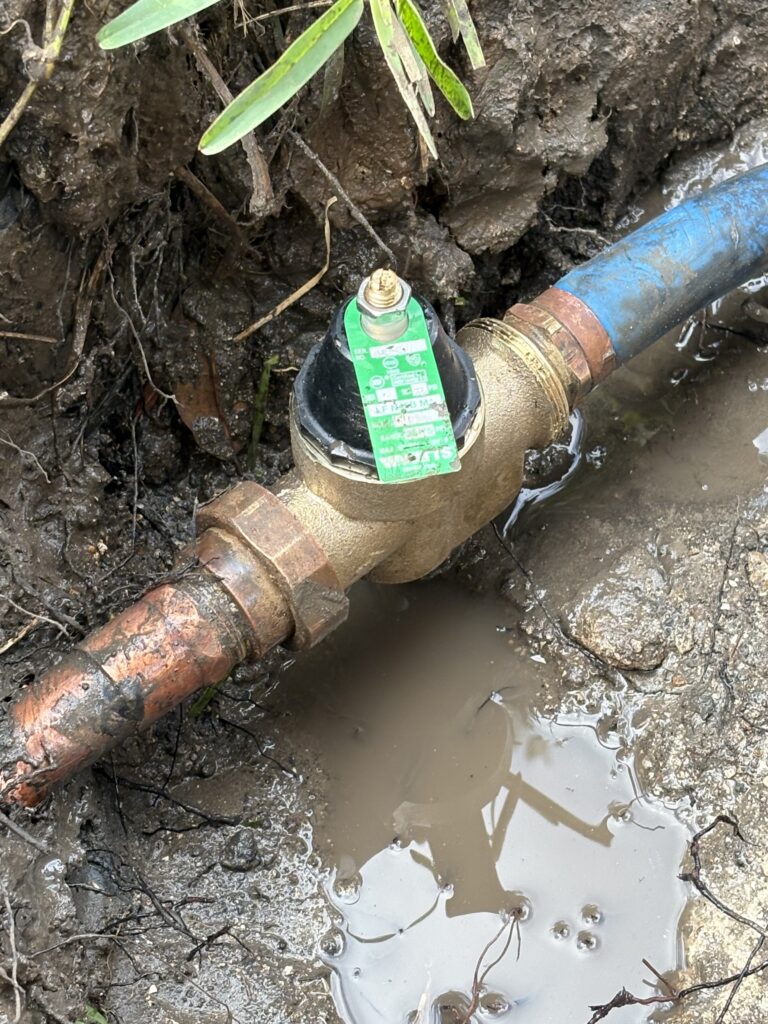
A pipe that cracked last winter does not always announce itself right away. The split may sit above the water line inside the wall, or debris and mineral scale may temporarily seal a hairline fracture. Then you turn the faucet on in April to water the flower beds, pressure hits that weak spot, and water sprays into the wall cavity or the crawl space. By the time you notice a stain on the ceiling below or hear water running with every fixture closed, real damage has already occurred. This delayed failure explains why so many homeowners insist their plumbing was fine all winter. It was not fine; it was simply not under pressure at the damaged point yet.
Watch for a few specific warning signs. A faucet that drips continuously after you shut it off may have a cracked seat or a damaged washer from ice expansion. A handle that turns much harder than it used to, or one that spins freely without controlling flow, often means the stem inside has been distorted. Water appearing at the base of the faucet where it meets the siding or brick points to a break just inside the wall. Reduced flow from the outdoor faucet while indoor fixtures run normally suggests a partial obstruction or a pinched line. Damp soil, mildew smells, or a soft spot in the landscaping near the foundation can indicate an underground supply line problem. Any unexplained jump in your water bill deserves attention as well.
If you suspect hidden damage, do not wait for it to reveal itself on its own schedule. Water inside a wall feeds mold, rots framing, and ruins insulation long before it becomes visible. Our technicians use acoustic and thermal equipment to pinpoint breaks without cutting open every wall in the house, which keeps the repair small and the restoration cost low. Suspect a hidden freeze break in your plumbing? Click here for our leak detection service. Catching a cracked line in September gives you time to fix it properly instead of scrambling during a holiday weekend. Early inspection also lets us check the rest of your exterior plumbing while we are there.
How Central Texas Weather Affects Outdoor Faucets Before The First Freeze
Our climate creates a specific kind of risk that colder regions do not face. In the upper Midwest, homes are built with deep foundations, buried supply lines, and exterior plumbing designed around months of subfreezing weather. Central Texas homes are built for heat, so water lines frequently run through uninsulated attic spaces, along exterior walls, and just barely under the surface of the yard. We get roughly ten to twenty freezing nights in an average winter, which sounds mild until you remember that one of them is all it takes. Winter Storm Uri in February 2021 proved how quickly that vulnerability turns into disaster across Williamson and Travis counties. Thousands of homes lost water not because the freeze lasted forever, but because the plumbing had no protection at all.
The other complication is how fast our temperatures swing. It can hit 78 degrees on a Tuesday afternoon and 24 degrees by Thursday morning, which leaves very little warning and even less time to prepare. Hardware stores sell out of faucet covers and pipe insulation within hours once a freeze warning goes out. Plumbers across the Austin metro book solid the moment temperatures drop, so same day help becomes hard to find right when everyone needs it. Preparing in September or October removes all of that pressure from your schedule. You buy materials at normal prices, install them at your convenience, and stop thinking about it. That is a much better position than standing in an empty aisle at nine at night.
Location within the region matters too. Homes in Georgetown, Jonestown, and Lago Vista sit at higher elevations and often run several degrees colder than central Austin on a clear winter night. Properties near Lake Travis and Hudson Bend deal with wind exposure that strips heat away from exterior plumbing faster than still air does. Newer subdivisions in Leander and Round Rock frequently have faucets on the north and west walls where sun exposure is limited all day. Take a walk around your house and note which faucets get direct afternoon sun and which stay shaded. The shaded ones on windward walls need the most protection. That five minute assessment tells you where to focus your effort.
How To Protect Outdoor Faucets Before The First Freeze Arrives
Protection comes down to three principles: remove the water, block the cold, and keep the supply line warm. Every effective method serves at least one of those goals, and the best approach uses all three together. None of this requires special tools or plumbing experience, and the materials cost less than a single service call. What it does require is doing the work before the temperature drops rather than after the forecast turns alarming. Set aside a Saturday morning in October and handle every exterior faucet on the property at once. Then check your work in December when the first cold front shows up on the forecast. A homeowner who follows these steps almost never deals with a frozen faucet at all.
Steps To Protect Outdoor Faucets Before The First Freeze
Start by disconnecting every garden hose on the property and draining it completely. Stretch each hose downhill or coil it while lifting one end so the water runs out, then store it in the garage or a shed where it stays out of standing water. Remove any splitter, timer, quick connect fitting, or backflow device screwed onto the faucet spout. Open the faucet fully and let it run for a few seconds, then close it firmly by hand without forcing the handle past its stop. On a freeze resistant faucet you should hear or see a small amount of water drain from the spout over the next minute as gravity empties the barrel. On a standard faucet nothing will drain, which tells you that particular faucet needs more attention. Note which type you have at each location so you know what you are dealing with.
Next, locate the indoor shutoff valve for each exterior faucet if your home has them. Many houses in the Cedar Park area include a dedicated valve in the garage, utility room, or under a nearby sink that isolates the outdoor line. Close that valve, then walk outside and open the faucet to release the trapped water and relieve pressure in the branch line. Leave the outdoor faucet open through the winter so any remaining moisture has room to expand instead of building pressure. Some valves include a small bleeder cap on the side that lets you drain the section completely; open it over a bucket after closing the main valve. This one step protects the faucet more thoroughly than any cover ever will, because there is simply no water left to freeze. If you cannot find a dedicated shutoff, a plumber can add one in an afternoon.
Finally, address the pipe itself where it runs through unconditioned space. Foam pipe sleeves cost a few dollars per length at any hardware store and slide directly over exposed copper or PEX in a crawl space, garage, or attic. Secure the seams with tape rated for the application so the sleeve does not gap open at the joints. Pay attention to the section that passes through the exterior wall, because that short run is where most freeze breaks happen. Heat tape or self regulating heat cable works well on lines that have frozen before, though it must be installed according to the manufacturer instructions and plugged into a protected outlet. Insulating pipes reduces heat loss and buys you several hours of protection during an overnight freeze. Combined with draining the line, it is very hard to beat.
Choosing Insulated Covers That Protect Outdoor Faucets From Freezing
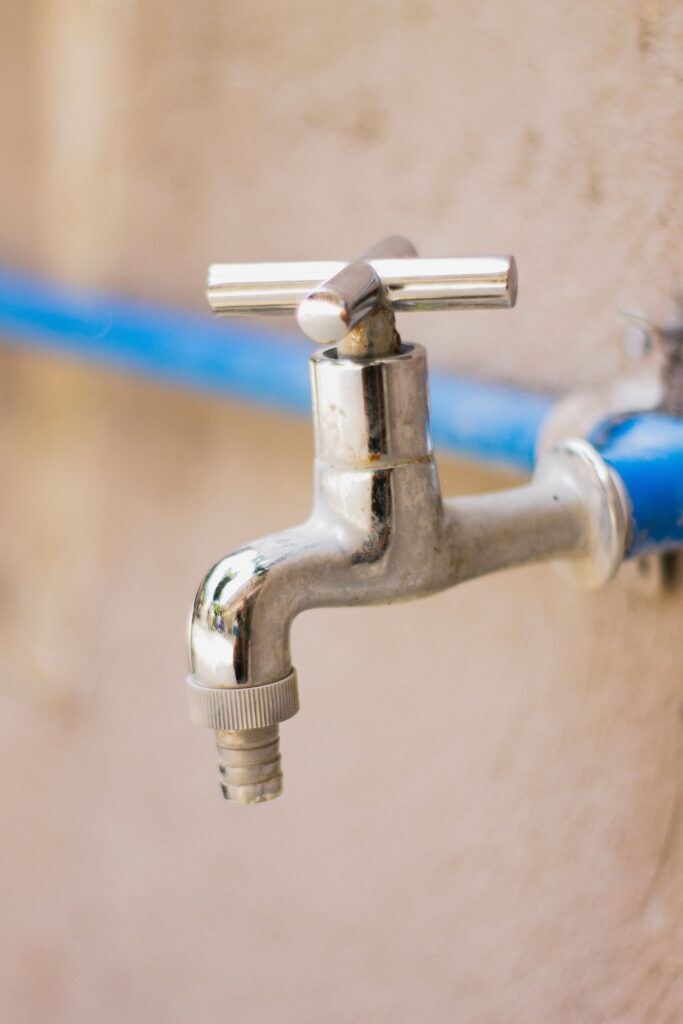
Faucet covers come in two basic styles, and both work when installed correctly. The hard shell dome style uses molded foam with a rubber loop that hooks over the faucet handle and cinches tight against the wall. The soft style is an insulated fabric bag with a drawstring that pulls closed around the pipe stub. Hard shells hold up better over multiple seasons and resist wind more effectively, which matters on exposed properties near the lake. Soft covers fit awkward installations better, especially faucets recessed into brick or sitting close to a downspout. Either one costs under ten dollars and installs in about thirty seconds. Buy them in early fall while stores actually have inventory.
The critical detail is the seal against the wall. A cover does not generate heat; it traps the small amount of warmth conducting outward through the wall and the pipe, and it blocks wind from stripping that warmth away. Any gap around the edge lets cold air circulate inside and largely defeats the purpose. Press the cover flat against the siding or masonry and tighten the strap until you cannot slip a finger underneath. If the wall surface is uneven brick, a bead of removable weatherstripping foam around the rim closes the gap. Check the cover after every windstorm, because a cover lying in the grass protects nothing at all. Homeowners often discover in spring that the cover blew off in November.
Understand the limits of what a cover can do. On a night in the mid twenties, a properly installed cover on a drained faucet is plenty. On a multiday event in the single digits with the power out, a foam dome alone will not save an undrained line. Covers work best as the final layer on top of hose removal and line drainage, not as a substitute for either one. They also do nothing for the pipe running through your attic or the irrigation backflow assembly standing out in the yard. Treat the cover as one part of a complete approach and your outdoor plumbing will handle almost anything Central Texas produces. Worried about the condition of the supply lines feeding your exterior faucets? Click here for our water supply line services.
Shutting Off And Draining Supply Lines To Protect Outdoor Faucets
Draining the supply line is the most reliable protection available, and it is worth understanding how it works. Water that is not present cannot freeze, expand, or split anything. When you close an interior valve and open the exterior faucet, gravity and air pressure push the standing water out of that branch. The result is an empty pipe from the valve outward, which stays empty until you turn the water back on in spring. This approach costs nothing beyond the two minutes it takes to perform. It is standard practice throughout colder parts of the country and works just as well here.
If your home lacks dedicated shutoff valves for exterior faucets, adding them is a straightforward job for a licensed plumber. We install a quarter turn ball valve on the branch line inside conditioned space, usually with a drain port so the section empties completely. The work typically takes under an hour per faucet in an accessible location and gives you permanent control over that line every winter afterward. Homes with slab foundations sometimes require a different approach, since the branch may run through the attic rather than a crawl space. Our technicians assess the actual routing in your home rather than guessing from the outside. That assessment also reveals any existing corrosion or undersized line that needs attention.
Irrigation systems deserve separate consideration during freeze preparation. The backflow prevention assembly on most residential sprinkler systems sits above ground on a riser, fully exposed to cold air, and it contains brass and plastic components that crack readily. Shut off the isolation valves on that assembly, open the test cocks to drain it, and wrap it in an insulated bag designed for the purpose. Set the controller to the off position so the system does not run during a freeze and coat your driveway in ice. Our backflow licensed and certified technicians handle these assemblies regularly and can test yours while winterizing it. A cracked backflow preventer is an expensive spring surprise that is entirely avoidable.
Why You Need A Professional Plumber To Protect Outdoor Faucets Before The First Freeze
Most freeze preparation is genuinely within reach for any homeowner, and we encourage people to handle the hoses, covers, and basic insulation themselves. Some situations call for a licensed plumber, though, and knowing the difference saves both money and stress. Homes with no accessible shutoff valves, aging galvanized supply lines, previous freeze damage, or complicated irrigation setups benefit from a professional walkthrough before winter. A single inspection identifies the weak points and fixes them while the weather is still mild and scheduling is easy. When a hard freeze does hit and something fails anyway, having a plumber you already trust makes the emergency far less painful. Whitestone Plumbing serves Cedar Park, Round Rock, Leander, Georgetown, Austin, Pflugerville, Jonestown, Lago Vista, and Hudson Bend.
Professional Inspections That Protect Outdoor Faucets Before Freezing Weather
A preseason plumbing inspection covers far more than the faucets on your exterior walls. We check the condition of every exposed supply line, verify that shutoff valves actually close, and look for corrosion at fittings that may not survive the stress of a cold snap. Attic and crawl space runs get particular attention, since those areas see temperatures nearly identical to the outdoors during a freeze. We also evaluate water pressure, because excessive pressure compounds the stress on already vulnerable joints. Any repairs we recommend get explained clearly with honest pricing before work begins.
Timing that inspection for early fall gives you the widest range of options. Parts are available, schedules are open, and you can make decisions without a storm bearing down on you. Repairs performed in mild weather cost less and go faster than the same work done at midnight in freezing rain. It also gives you time to compare options on larger items like repiping an aging section of supply line. Have older pipes that may not survive another Texas freeze? Click here for our repiping services.
Free estimates make the decision simple. You learn exactly what condition your plumbing is in, what it would cost to address any issues, and what you can safely handle on your own. There is no obligation and no pressure attached to that conversation. Many homeowners find that their plumbing is in good shape and only needs a couple of shutoff valves added. Others discover a problem they had no idea existed and get it fixed for a fraction of what an emergency would have cost.
Emergency Repairs When Outdoor Faucets Freeze And Burst
Even with good preparation, extreme weather occasionally wins. A power outage during a hard freeze can drop indoor temperatures far enough to freeze lines that would normally be safe. If a faucet or pipe does burst, shut off the main water supply to your home immediately and open a few fixtures to relieve pressure. Know where your main shutoff is located before you need it, because searching for it while water pours into the house is a bad experience. Then call for help rather than attempting a repair on a pressurized line.
We answer emergency calls around the clock, every day of the year, including holidays. Freeze damage does not respect business hours, and neither do we. Our trucks carry the fittings and materials needed to repair burst copper, PEX, and CPVC on the spot in most cases. Dealing with a burst pipe right now? Click here for our burst pipe repair service.
Fast response limits the damage. A pipe leaking behind sheetrock for six hours creates a much larger problem than one shut down within twenty minutes. We locate the break, isolate the affected section, and get water restored to the rest of the house as quickly as the situation allows. Our technicians also document what happened so you have clear information for an insurance claim. Then we talk through what would prevent a repeat next winter.
Why Choose Whitestone Plumbing To Protect Your Outdoor Faucets
Whitestone Plumbing is a locally owned and operated company based right here at 702 Dewberry Dr in Cedar Park. We bring over twenty years of plumbing experience to every job, from a ten minute faucet cover consultation to a full repipe. Our technicians are licensed, insured, and backflow certified, which matters when irrigation assemblies and cross connection protection enter the picture. We live in this area, deal with the same freezes you do, and know exactly how homes around Williamson and Travis counties are built. That local knowledge shows up in the quality of the work.
Clear and honest pricing is a commitment, not a slogan. You get a free estimate before work starts, and the number we quote is the number you pay. We explain what needs attention, what can wait, and what you can reasonably handle on your own. Nobody at this company earns anything by selling you a repair you do not need. That approach has built our reputation across Cedar Park, Leander, Round Rock, and Georgetown.
Reach us at (512) 826 6217 or info@callwhitestone.com to schedule your freeze preparation service. We are dedicated to providing five star service on every call, and our 24/7 emergency availability means help is there when the unexpected happens. Take care of your outdoor faucets now while the weather is still pleasant. A short appointment this fall protects your home through the entire winter. Call us today and cross it off the list.