
Why Your Kitchen Sink Smells And What Fixes It
A smelly kitchen sink is one of the most common plumbing complaints homeowners in Cedar Park and Central Texas deal with year-round. The odor often hits hardest in late spring and early summer when warmer temperatures speed up bacterial growth inside drain lines and garbage disposals. That foul kitchen sink smell can travel through your entire kitchen, making meal prep unpleasant and signaling that something deeper is wrong with your plumbing system. Most kitchen sink odors come from trapped food debris, grease buildup, dry P-traps, or venting issues hidden behind the wall. The good news is that a smelly kitchen sink is almost always fixable once you know the source. Whitestone Plumbing has helped countless local homeowners track down the cause and eliminate kitchen drain odors for good. This guide walks you through every common reason your kitchen sink smells, plus the professional fixes that actually work long-term.
Common Reasons Your Kitchen Sink Smells Bad
The most common reasons your kitchen sink smells bad come down to food rot, grease coating, dry plumbing traps, and bacteria thriving in damp drain walls. Kitchen sinks handle more organic waste than any other drain in the home, which makes them a magnet for odor-causing buildup. Coffee grounds, eggshells, oils, dairy, and fibrous vegetables all leave residue that bacteria feed on. As that residue decomposes inside your pipes and disposal, it releases sulfur-like gases that rise back through the drain opening. Identifying the exact source of your kitchen sink smell helps you choose the right fix and prevent the problem from coming back. Below are the three biggest culprits behind kitchen sink odors in Cedar Park homes.
A Smelly Garbage Disposal Is The Top Cause Of Kitchen Sink Smells
A smelly garbage disposal is by far the most common cause of a stinky kitchen sink, and it is usually the first place a plumber will inspect. Food particles cling to the rubber splash guard, the grinding chamber walls, and the underside of the flange where most homeowners never clean. Over weeks and months, that trapped food rots and creates a sour, sulfur-heavy odor that gets worse every time you run water. Greasy foods like butter, salad dressings, and meat scraps coat the inside of the disposal and trap even more debris. Hot water alone will not break down that grease layer; in fact, hot water often spreads it deeper into the drain line. Bacteria love this dark, wet, food-coated environment, and they multiply fast in the warm Texas climate.
Cleaning a smelly garbage disposal properly takes more than a lemon peel or a quick rinse. You need to scrub the rubber splash guard with a stiff brush and a degreasing dish soap, since most of the odor lives on the underside of those flaps. Running ice cubes with rock salt through the disposal helps scrape buildup off the grinding components and freshens the chamber. Baking soda followed by white vinegar creates a fizzing reaction that loosens grime and neutralizes odors trapped in hard-to-reach spots. Citrus peels added at the end give a fresh scent, but they are not a real cleaning step on their own. For disposals that still smell after a deep cleaning, the unit may have internal damage or a failing seal that traps rot inside the housing.
If your garbage disposal still smells after cleaning, the appliance itself may be reaching the end of its lifespan. Most residential garbage disposals last around 8 to 12 years before motors weaken, seals leak, and internal components corrode. A failing disposal often hums, drains slowly, or leaks underneath the sink in addition to smelling bad. At that point, replacement is usually more cost-effective than repeated repairs. Need help with a smelly or failing disposal? Click here for our garbage disposal repair service or click here for our garbage disposal installation service to upgrade to a quieter, more powerful unit.

A Dry Or Damaged P-Trap Creates Strong Kitchen Sink Smells
A dry or damaged P-trap is another major reason your kitchen sink smells like sewer gas or rotten eggs. The P-trap is the curved section of pipe under your sink that holds a small pool of water at all times. That water pool acts as a seal, blocking sewer gases from rising up through the drain and into your kitchen. When the P-trap dries out, cracks, or loses its seal, those gases push straight into your home and create a powerful stench. Kitchen sinks that go unused for a week or longer often develop dry P-traps as the water evaporates. Vacation homes, guest kitchens, and prep sinks in Cedar Park are especially prone to this issue during dry summer months.
Refilling a dry P-trap is simple; just run water down the drain for 30 to 60 seconds to restore the water seal. If the smell returns within a day or two, the P-trap may have a crack, a loose slip nut, or a worn rubber washer letting the water leak out. You may notice water stains, dampness, or pooling inside the cabinet under your sink when the trap is compromised. Old metal P-traps corrode from the inside out and develop pinholes that drain the seal completely. Plastic P-traps last longer, but they can still warp or split at the joints over time. A licensed plumber can inspect the assembly, replace damaged parts, and confirm the trap is sealing properly.
P-trap issues sometimes signal larger drain problems that need professional attention right away. Improperly installed traps, missing vent connections, or sagging drain lines can all mimic a dry trap and let sewer gas escape. If you keep refilling the trap and the kitchen sink smell keeps coming back, the issue is deeper in the plumbing system. Whitestone Plumbing inspects the full drain assembly, identifies hidden leaks, and replaces failing components with code-compliant fittings. Click here for our drain cleaning service if persistent kitchen sink odors are pointing to a deeper drain problem.
Grease And Food Buildup Inside Drain Lines Cause Lingering Kitchen Sink Smells
Grease and food buildup inside your kitchen drain line is one of the most stubborn causes of a smelly kitchen sink. Every time you rinse dishes, small amounts of fat, oil, and food particles wash down the drain and stick to the inside walls of the pipe. Over months and years, that buildup hardens into a thick, sticky coating that narrows the drain and traps everything that passes through. Bacteria feed on the rotting organic matter inside that coating, producing the foul smell that drifts back up through the sink. You may also notice slow drainage, gurgling sounds, or water backing up briefly before clearing. These are early warning signs that your kitchen drain line needs professional cleaning before it clogs completely.
Store-bought drain cleaners rarely solve grease-related kitchen sink odors and often make the problem worse. Caustic chemical cleaners can eat through pipe walls, damage rubber gaskets, and create dangerous fumes inside your home. They also do not fully remove the hardened grease coating; they just punch a small hole through it temporarily. Within weeks, the buildup closes back in and the smell returns stronger than before. Professional drain cleaning uses tools like hydro-jetting and motorized augers to scour the entire inner wall of the pipe. That deep clean removes the food source for bacteria and restores full drain flow.
Routine drain maintenance is the best way to prevent kitchen sink smells from coming back season after season. Pouring grease into a sealed container instead of down the drain stops the buildup at the source. Running hot water and a small amount of dish soap after every meal helps flush light residue before it hardens. Scheduling a professional drain cleaning every one to two years keeps your kitchen plumbing flowing freely and odor-free. Cedar Park homeowners with older homes or heavy cooking habits benefit most from regular maintenance. Whitestone Plumbing offers thorough drain cleaning services that target grease buildup, food clogs, and bacterial growth at every level of the drain system.
How To Fix A Smelly Kitchen Sink For Good
Fixing a smelly kitchen sink for good takes more than masking the odor with cleaners or air fresheners. The smell will keep coming back until the actual source is removed from the drain, the disposal, the trap, or the vent. A real fix combines deep cleaning, mechanical inspection, and sometimes plumbing repairs to eliminate the cause completely. Most homeowners can handle the first round of cleaning themselves, but recurring kitchen sink smells point to issues that need a licensed plumber. The steps below walk you through the proven methods that actually work in Cedar Park homes. Following them in order saves time, money, and frustration.
Deep Cleaning Methods That Fix A Smelly Kitchen Sink
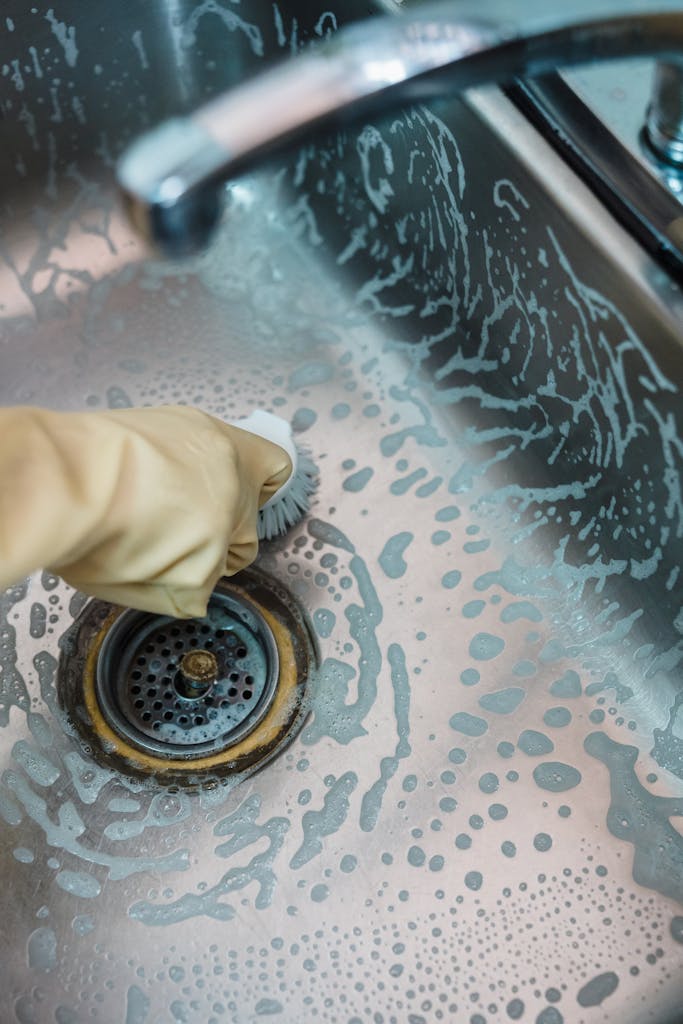
Deep cleaning is the first and most important step in fixing a smelly kitchen sink. Start by removing any standing water and clearing visible debris from the strainer basket and drain opening. Mix half a cup of baking soda with a cup of white vinegar, pour it down the drain, and let it sit for 15 to 20 minutes to break up grime. Follow with a kettle of hot, not boiling, water to flush loosened residue down the line. Boiling water can crack porcelain and warp PVC pipe joints, so stick with hot tap water for safety. Repeat the process two or three times if the smell has been building up for months.
For the garbage disposal, lift the rubber splash guard and scrub the underside with a stiff brush, dish soap, and warm water. This is where most kitchen sink odors actually live, even though homeowners rarely think to clean it. Run a tray of ice cubes mixed with rock salt and a splash of lemon juice through the disposal to scour the grinding chamber. Wipe down the sink flange, the rim of the drain, and the area around the sink stopper with an antibacterial cleaner. Many kitchen sink smells trace back to gunk hiding right at the drain opening rather than deep inside the pipe. A thorough wipe-down often gives noticeable improvement within minutes.
Enzyme-based drain cleaners are a safe, long-term option for maintaining a fresh-smelling kitchen sink. These cleaners use natural bacteria to digest organic buildup inside the drain line without damaging your pipes. Pour them in at night so they can work undisturbed for eight to twelve hours while the sink sits idle. Use enzyme cleaners once a month to keep grease, food, and bacteria from rebuilding inside the drain. Avoid mixing different cleaning products, since chemical reactions can produce toxic fumes or damage plumbing components. Consistent monthly maintenance is far more effective than waiting for the smell to come back.
When Plumbing Repairs Are Needed To Fix A Smelly Kitchen Sink
When deep cleaning does not fix your smelly kitchen sink, plumbing repairs are usually the next step. Persistent odors often point to cracked pipes, failing seals, blocked vents, or damaged drain components. A licensed plumber can run a camera through the drain line to find hidden problems that no cleaner will solve. Cracks in the drain pipe let sewer gas leak directly into the cabinet under your sink, then up into the kitchen. Loose or corroded slip joints around the P-trap allow the water seal to fail and release foul smells. These issues require physical repair, not just cleaning.
Blocked plumbing vents are an underestimated cause of kitchen sink smells in Cedar Park homes. Every drain in your house connects to a vent stack that runs up through the roof, allowing air to balance pressure inside the pipes. When that vent gets blocked by leaves, bird nests, or debris, the P-trap water gets siphoned out every time another fixture drains. The result is a kitchen sink that smells like sewer gas without any obvious cause inside the cabinet. A plumber inspects the vent stack from the roof and clears the blockage to restore proper airflow. Once airflow is restored, the P-trap holds its seal and the smell disappears.
Older homes in Central Texas sometimes have outdated drain configurations that violate current plumbing code. Improperly sloped pipes, missing traps, and undersized drain lines all contribute to recurring kitchen sink odors. Repiping a section of the drain system fixes these underlying issues and brings the plumbing up to modern standards. The repair pays off through better drainage, fewer clogs, and a permanently fresher kitchen. Click here for our piping service or click here for our leak detection service if your kitchen sink smell is coming from inside the walls or under the slab.
Preventing Future Kitchen Sink Smells With Smart Plumbing Habits
Preventing future kitchen sink smells comes down to a few smart plumbing habits practiced consistently. Scrape plates fully into the trash before rinsing them, since even small food particles add up over time. Avoid putting grease, oil, coffee grounds, eggshells, pasta, rice, and fibrous vegetables down the drain or disposal. Run cold water before, during, and after using the garbage disposal to keep particles moving through the drain line. Let the disposal run an extra ten to fifteen seconds after the grinding noise stops to fully clear the chamber. These small habits make a huge difference in how your kitchen sink smells week to week.
Regular cleaning of the sink, drain, and disposal keeps odor-causing bacteria from gaining a foothold. Wipe down the sink and drain opening daily with a kitchen-safe cleaner to remove fresh residue. Scrub the disposal splash guard once a week with dish soap and a stiff brush. Pour an enzyme drain cleaner down the kitchen sink once a month to keep the drain line clear. Replace your sink stopper or strainer basket if it shows signs of corrosion or trapped buildup that will not wash off. A clean sink simply does not produce the same odors as a neglected one.
Annual plumbing inspections catch small problems before they grow into expensive repairs and persistent smells. A licensed plumber checks your P-trap, drain line, vent stack, and disposal for early signs of wear. Catching a hairline crack or a loose seal early saves you from full pipe replacement later. Inspections also confirm that your plumbing meets current code, which matters for home value and insurance coverage. Cedar Park homeowners who schedule yearly plumbing checkups deal with far fewer kitchen sink complaints throughout the year. Prevention always costs less than emergency repair.
Why You Need A Professional Plumber To Fix A Smelly Kitchen Sink
A smelly kitchen sink might seem like a minor annoyance, but it often signals a real plumbing problem hiding behind the walls or under the floor. Persistent odors can point to sewer gas leaks, cracked pipes, vent blockages, or failing fixtures that get worse over time. A licensed plumber has the tools, training, and experience to find the exact source and fix it the right way. DIY fixes only go so far, and the wrong product or technique can make the problem worse or damage your plumbing. Whitestone Plumbing brings over 20 years of plumbing experience to every kitchen sink smell call in Cedar Park and the surrounding Central Texas area.
A Professional Plumber Pinpoints The Exact Source Of A Smelly Kitchen Sink
A professional plumber pinpoints the exact source of a smelly kitchen sink using diagnostic tools homeowners do not have access to. Drain cameras run through the pipe to show real-time video of buildup, cracks, and blockages inside the line. Electronic leak detectors find hidden moisture behind cabinets and inside walls where sewer gas may be escaping. Pressure tests confirm whether vents are working correctly and whether traps are holding their water seal. These methods take guesswork out of the equation and lead to a targeted, lasting fix. Without them, you are just trying random solutions and hoping one works.
Experience matters when diagnosing a kitchen sink smell, because the same odor can come from very different sources. A trained plumber recognizes the subtle differences between sewer gas, rotting food, mold, and stagnant water odors. That experience lets the plumber narrow down the cause in minutes rather than hours of trial and error. It also helps catch related issues, like slow leaks or early pipe corrosion, that the homeowner did not notice. Catching these problems early prevents bigger repairs down the road. Whitestone Plumbing technicians have seen every kitchen sink odor scenario Central Texas can throw at them.
Once the source is identified, the right repair gets the smell out of your kitchen for good. That might mean replacing a P-trap, clearing a vent stack, repairing a drain line, or installing a new garbage disposal. The fix is specific to your actual problem, not a generic suggestion that may or may not help. Professional repairs come with warranties, code compliance, and peace of mind. You stop wasting money on temporary solutions and get a real result.
A Professional Plumber Saves Time And Money On A Smelly Kitchen Sink
A professional plumber saves you serious time and money on a smelly kitchen sink by skipping the trial-and-error phase entirely. Homeowners often spend weeks trying different cleaners, gadgets, and home remedies that never fully solve the problem. Each failed attempt costs money in products and time spent dealing with the smell. A plumber arrives, diagnoses the cause, and fixes it in one visit when possible. That efficiency is worth far more than the cost of the service call. Your kitchen returns to normal use the same day in most cases.
Avoiding plumbing damage is another major benefit of calling a professional early. Caustic drain cleaners eat through pipe walls and rubber seals, leading to leaks and expensive replacements. Improper DIY repairs can void manufacturer warranties on disposals, faucets, and connected appliances. Working under the sink without the right tools often results in stripped fittings, broken slip joints, and water damage to the cabinet. A licensed plumber prevents all of these costly mistakes. The service call almost always costs less than fixing damage caused by a botched DIY.
Long-term savings come from solving the root cause rather than the symptom. A kitchen sink smell that keeps coming back is telling you something needs real repair, not just another round of cleaning. Addressing the actual issue once stops the cycle and protects your home from larger plumbing failures. It also extends the life of your sink, disposal, and drain lines. Cedar Park homeowners who invest in professional plumbing service spend less over the years than those who patch problems repeatedly.
Why Choose Whitestone Plumbing To Fix Your Smelly Kitchen Sink
Whitestone Plumbing is locally owned and operated right here in Cedar Park, with deep roots in the Central Texas community. Our team brings over 20 years of plumbing experience to every kitchen sink call, from simple disposal cleanings to full drain line replacements. We are licensed, insured, and backflow certified, so every repair meets Texas plumbing code and protects your home. Free estimates and clear, honest pricing mean you know exactly what the work costs before we start. No surprises, no upsells, no pressure.
We treat every Cedar Park home like our own and stand behind our work with a five-star service standard. Our technicians arrive on time, explain what is causing your kitchen sink smell, and walk you through every option. We use professional-grade tools and code-compliant materials on every job. Emergency plumbing service is available 24 hours a day, 7 days a week for kitchen smells that signal serious sewer gas leaks. You never have to wait until Monday morning to get help.
Call Whitestone Plumbing today at (512) 826-6217 to schedule service or get a free estimate on your smelly kitchen sink. We serve Cedar Park, Round Rock, Leander, Georgetown, Austin, Pflugerville, Lago Vista, Jonestown, and Hudson Bend. Whether your kitchen sink smells like rotten food, sewer gas, or something you cannot identify, we have the experience to fix it right the first time. Reach out by phone, email at info@callwhitestone.com, or visit us at 702 Dewberry Dr in Cedar Park. Your fresh-smelling kitchen is just one call away.