
Why Water Heaters Fail Faster In Texas
Living in Cedar Park offers many benefits, from the warm climate to the vibrant community atmosphere, but homeownership here comes with a specific set of challenges. One of the most frequent frustrations for local residents is the surprisingly short lifespan of their water heaters. While manufacturers often tout a life expectancy of ten to twelve years for a standard tank water heater, many Texans find themselves replacing their units far sooner, sometimes in as little as six to eight years. It is a phenomenon that leaves many scratching their heads, wondering if they simply bought a lemon or if they are doing something wrong. The reality is that the environment in Central Texas is uniquely hostile to plumbing appliances.
The premature failure of water heaters in this region is not a coincidence; it is a direct result of the local water chemistry and the way homes are constructed. The very water that flows from your tap contains ingredients that, while safe for human consumption, are destructive to metal tanks and heating elements. When you combine this with the extreme heat of Texas summers and the specific installation locations common in this area, you create a perfect storm for mechanical failure. Understanding these forces is the first step in mitigating them. It allows homeowners to adjust their maintenance schedules and expectations, turning a mysterious recurring expense into a manageable aspect of home care.
Ignorance of these local factors is expensive. Most people install a water heater and forget about it until the shower turns cold or a puddle appears. In other parts of the country with neutral water and milder climates, this “install and ignore” strategy might work for a decade. Here, it is a recipe for disaster. The acceleration of wear and tear happens silently, day by day, inside the steel shell of the tank. By the time the symptoms become obvious, the damage is often irreversible. To protect your investment, you must understand exactly what is happening inside that tank every time the burner fires up or the element glows.
The Hard Water of the Edwards Aquifer
The primary culprit behind the shortened lifespan of Texas water heaters is the geology beneath our feet. Cedar Park and the surrounding areas rely heavily on water from the Edwards Aquifer and similar limestone-rich sources. As rainwater filters down through the ground to these aquifers, it dissolves high concentrations of calcium and magnesium carbonate from the limestone bedrock. This is what classifies the water as “hard.” While hard water is generally considered healthy to drink because of the mineral content, it is a relentless adversary for plumbing systems.
When hard water enters your water heater, it is subjected to heat. This is where the chemistry becomes problematic. Calcium and magnesium are less soluble in hot water than they are in cold water. As the temperature rises, these minerals precipitate out of the liquid and solidify. They transform from invisible dissolved particles into solid crystals of calcium carbonate, commonly known as scale or limestone. This process happens every single time your water heater cycles on. Over weeks, months, and years, this creates a significant accumulation of rock-like material inside the tank.
The volume of sediment that can build up in a Texas water heater is staggering. It is not uncommon for plumbers to remove old tanks that contain twenty or thirty pounds of rock sediment in the bottom. This is not soft mud; it is hardened scale that fuses to the interior surfaces. This foreign material fundamentally changes the operating environment of the water heater. It displaces water, meaning you have less hot water available than the tank’s capacity suggests, but more importantly, it creates a physical barrier between the heat source and the water.
The Insulating Effect of Sediment
In a gas water heater, the burner is located at the bottom of the tank. Its job is to heat the metal bottom of the tank, which then transfers that heat to the water. When a thick layer of sediment accumulates on the bottom of the tank, it acts as an insulator. Limestone is a poor conductor of heat. Instead of the heat transferring efficiently into the water, it gets trapped in the metal at the bottom of the tank and in the sediment layer itself. This forces the burner to run longer and hotter to achieve the desired water temperature.
This overheating creates immense thermal stress on the metal of the tank. The steel bottom of the water heater is designed to withstand specific temperatures, but when covered in sediment, it can exceed those design limits. The metal expands and contracts more violently than intended, leading to metal fatigue. Eventually, cracks develop in the glass lining that protects the steel from rust. Once the lining is compromised, the water attacks the steel directly, leading to a leak. Essentially, the sediment causes the tank to cook itself to death from the bottom up.
For electric water heaters, the mechanism of failure is different but equally destructive. The heating elements are immersed directly in the water. As the minerals precipitate, they encrust the heating elements in a thick layer of lime scale. This calcification acts like a winter coat for the element, preventing it from releasing heat into the water. The internal temperature of the element skyrockets because the heat has nowhere to go. This causes the copper sheath of the element to split or the internal wire to burn out. In Texas, it is common to pull out an electric element that looks like a jagged stick of coral due to the massive buildup of minerals.
The Sounds of a Dying Heater
One of the tell-tale signs of this sediment struggle is the noise. Many Cedar Park homeowners are familiar with the popping, banging, or rumbling sounds coming from their water heater. This phenomenon is often referred to as “kettling.” It occurs when water gets trapped in pockets within the layer of sediment at the bottom of the tank. As the burner heats the tank, this trapped water turns to steam instantly. Small steam bubbles explode through the layer of sediment, rattling the tank and creating a percussion of pops and bangs.
While the noise itself is annoying, it indicates that physical damage is occurring. Each of those small steam explosions creates a shockwave. Over time, these vibrations loosen the fittings, stress the welds, and damage the protective glass lining. It is the audible sound of the appliance destroying itself. A silent water heater is generally a happy water heater. Once the rumbling starts, it means the sediment layer is already thick enough to interfere with proper heat transfer.
Ignoring these sounds is a common mistake. Homeowners assume the heater is just working hard, but in reality, it is working inefficiently and dangerously. The longer the unit operates with this level of sediment, the higher the risk of a catastrophic failure. The noise is a plea for maintenance, specifically a thorough flushing of the tank, although once the sediment has hardened into a solid mass, simple flushing is often insufficient to remove it.
Accelerated Anode Rod Depletion
Every tank water heater is equipped with a crucial component called the anode rod. This is a long rod made of magnesium, aluminum, or zinc that hangs down into the center of the tank. Its sole purpose is to rust. It is a “sacrificial” anode, meaning it is designed to corrode so that the steel tank does not. Through a process called electrolysis, the corrosive elements in the water attack the anode rod instead of the exposed steel of the tank walls.
In Central Texas, the water is highly conductive due to the dissolved mineral content. This high conductivity accelerates the electrolytic process. The anode rod in a Cedar Park home is consumed much faster than one in a region with soft, neutral water. In some areas of the country, an anode rod might last six or eight years. Here, it can be completely eaten away in three or four years. Once the anode rod is depleted, the water immediately begins to attack the steel tank.
Most homeowners never check their anode rod. They do not even know it exists. Consequently, the rod dissolves completely, the core wire remains, and the tank is left defenseless against corrosion. The minute pinhole leaks that eventually flood a garage or attic are the result of this unseen chemical battle. Because the local water drives this reaction so aggressively, the window of protection provided by the factory-installed anode is significantly shorter, leading to premature tank failure if the rod is not replaced.
The Attic Installation Factor
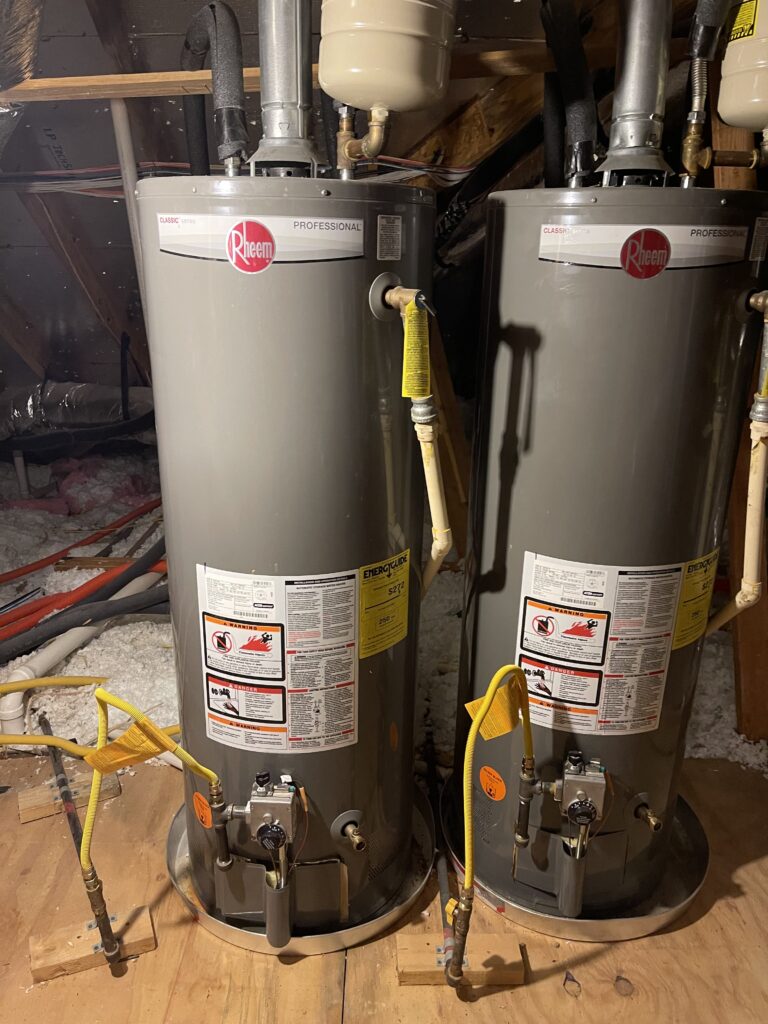
Another factor unique to warmer regions like Texas is the placement of the water heater. To save square footage in the living area, builders often install water heaters in the attic. While this makes sense for space planning, it places the appliance in a brutal environment. In the summer, attic temperatures in Cedar Park can easily exceed 140 degrees Fahrenheit. This extreme ambient heat takes a toll on the external components of the water heater.
Electronic control valves, sensors, and the pilot light assembly on gas units are designed to operate within a certain temperature range. When subjected to the baking heat of a Texas attic for months on end, plastic components become brittle and electronics can malfunction. The thermal stress shortens the lifespan of the control mechanisms, leading to expensive repairs or the need for total replacement.
Furthermore, the location exacerbates the consequences of failure. A leak in a basement (common in the north) is an inconvenience. A leak in a Texas attic is a catastrophe that ruins ceilings, insulation, drywall, and flooring below. This high-stakes placement means that homeowners cannot afford to limp along with an aging heater; they must replace it at the first sign of trouble to avoid massive property damage. The harsh environment combined with the high risk of water damage forces an earlier retirement for many units.
Thermal Expansion and Closed Loop Systems
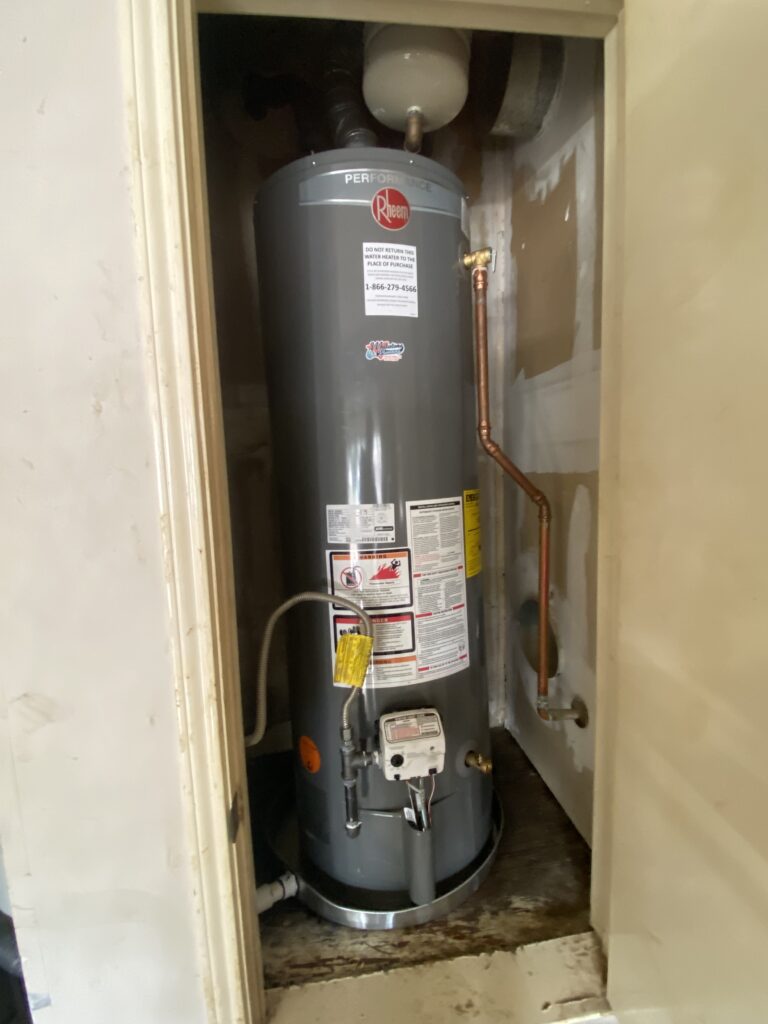
As Cedar Park has grown, municipal regulations regarding plumbing systems have tightened. Many homes are now on “closed loop” systems. This happens when a check valve or pressure reducing valve is installed on the main water line to prevent water from flowing back into the city main. While this protects the municipal supply, it creates a pressure problem for the water heater.
Water expands when it is heated. In an open system, this expanded water would simply push back into the city main. In a closed system, the extra volume has nowhere to go. It creates a spike in pressure inside your home’s plumbing pipes and the water heater tank. This thermal expansion causes the tank to flex, expanding and contracting with every heating cycle. This constant ballooning weakens the steel tank and the glass lining.
In Texas, where the incoming water temperature can be warm but the target temperature is hot, the expansion is significant. Without a properly functioning thermal expansion tank to absorb this extra volume, the water heater bears the brunt of the pressure. The rapid fluctuations in pressure stress the welds of the tank, leading to leaks much sooner than expected. Many older homes lack expansion tanks, or have tanks with failed bladders, leaving the water heater vulnerable to these pressure spikes.
The Cost of Efficiency Loss
The failure of a water heater is not always a sudden burst; sometimes it is a slow death by inefficiency. The scale buildup discussed earlier does more than damage the tank; it drives up your utility bills. Because the heater has to run longer to heat the water through the layer of rock, it consumes more gas or electricity. In a state where air conditioning already drives high energy costs, an inefficient water heater adds insult to injury.
This loss of efficiency often prompts homeowners to replace the unit before it physically leaks. When the hot water runs out halfway through a shower because the tank is half-full of rock, the unit has effectively failed. It is no longer performing its function. In Texas, the timeline from “new” to “functionally obsolete due to sediment” is compressed. You might have a tank that doesn’t leak but also doesn’t provide hot water efficiently.
Replacing the unit becomes a financial decision based on monthly operational costs. Continuing to run a limed-up heater is throwing money away. This functional failure often happens around the seven or eight-year mark, contributing to the statistic that Texas heaters fail faster. It is not just about structural integrity; it is about performance degradation.
The reality of owning a home in Cedar Park is that your water heater is fighting an uphill battle from the day it is installed. The combination of hard, mineral-rich water, aggressive electrolytic corrosion, and intense environmental heat creates a lifespan that is significantly shorter than the national average. It is not a manufacturing defect, but a consequence of our local geography and climate. Accepting this fact is the first step toward better home management.
However, a shorter lifespan does not have to be a foregone conclusion. While you cannot change the water chemistry coming into your home, you can change how you treat your appliances. Regular maintenance is the key to extending the life of your heater. Flushing the tank annually to remove sediment before it hardens, checking and replacing the anode rod every few years, and ensuring you have a functional expansion tank can add years of service to your unit. It transforms a passive waiting game into an active preservation strategy.
For those who are tired of the cycle of replacement, water treatment solutions like softeners or conditioners can drastically reduce the mineral load entering the tank. If you are unsure about the health of your water heater or want to implement a maintenance plan to fight back against the Texas elements, Whitestone Plumbing is here to help. Our team understands the specific challenges of Cedar Park plumbing. We can inspect your current unit, perform necessary flushes, and help you strategize for the future to ensure you get the most out of your investment.